




What Are the 5 Main Parts of Fiber Optic Cabling?
Fiber optic cables are engineered with precision to ensure they transmit data reliably. The five main parts of a fiber optic cable are:
-
Glass: The core component where light travels to carry data.
-
Fiber Core: A thin strand of glass or plastic, typically measured in microns, that is the primary pathway for light transmission.
-
Cladding: A layer surrounding the core, designed to reflect light back into the core to minimize signal loss.
-
Tight Buffer Tubes: Protective layers surrounding the cladding to shield the fiber from environmental damage, such as moisture or impact.
-
Aramid Strength Members and Jacket: These components provide structural integrity. The aramid yarn (commonly known as Kevlar) prevents the cable from stretching, while the outer jacket adds protection against physical damage.
How Many Fiber Optic Strands Do You Need to Get a Connection?
The number of fiber strands you need depends on your application.
This setup is particularly useful for reducing fiber usage in long-distance or high-capacity networks.
Typically, two strands are sufficient for most network connections:
-
One strand sends data.
-
The other strand receives data.
For single-mode cabling, you can use bidirectional equipment, which allows a single strand of glass to handle both sending and receiving data.
What's the Difference Between a Fiber Optic Patch Cable and a Distribution Cable?
The internal design of fiber optic patch cables and distribution cables varies based on their purpose.
Do you know what they look like on the inside?
-
Patch Cables: These have a thinner jacket and fewer aramid yarn strength members. They’re designed for shorter distances, like connecting devices in a rack or patch panel.
-
Distribution Cables: These feature a thicker, ruggedized jacket and significantly more aramid yarn strength members. They’re built for longer distances and more demanding environments.
What Is a Fiber Optic PLC Splitter?
A PLC splitter (Planar Lightwave Circuit) uses advanced technology to divide a single lightwave into multiple outputs.
Why would you need a PLC splitter?
They are essential in installations requiring multiple data outputs, such as in fiber-to-the-home (FTTH) deployments, data centers, or small network hubs. They also efficiently distribute light signals without the need for active power.
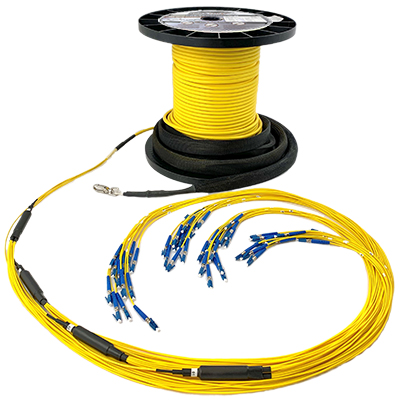
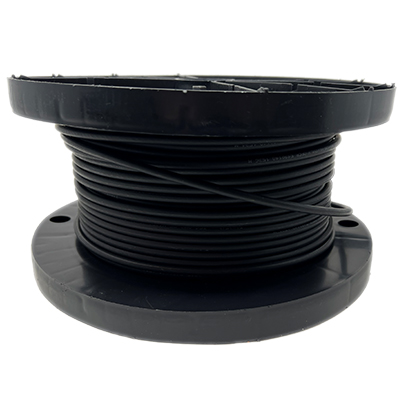
What Products Are We Describing Here?

Why Are Ethernet Cable Conductors Color-Coded?
The color-coding of conductors inside Ethernet cables ensures proper termination of the pinout—the specific arrangement of wires to match Ethernet standards (like T568A or T568B).
What does this mean?
Correct termination ensures the cable can transmit data effectively without errors. Following the color codes minimizes confusion during installation and maintenance, especially in large setups.
What Is Fiber Ribbon Cable?
Fiber ribbon cables are specialized cables used for high strand count fiber installations, making them ideal for large-scale networks like data centers or metropolitan infrastructure.
Here’s an example of a ribbon cable with 1,728 strands. Inside you'll see there are 6 segmented groups, each containing 288 strands.
The strands are arranged in a flat ribbon structure, making them compatible with fusion splicers designed for ribbon cables.
This design allows for faster and more efficient splicing compared to traditional round cables.