


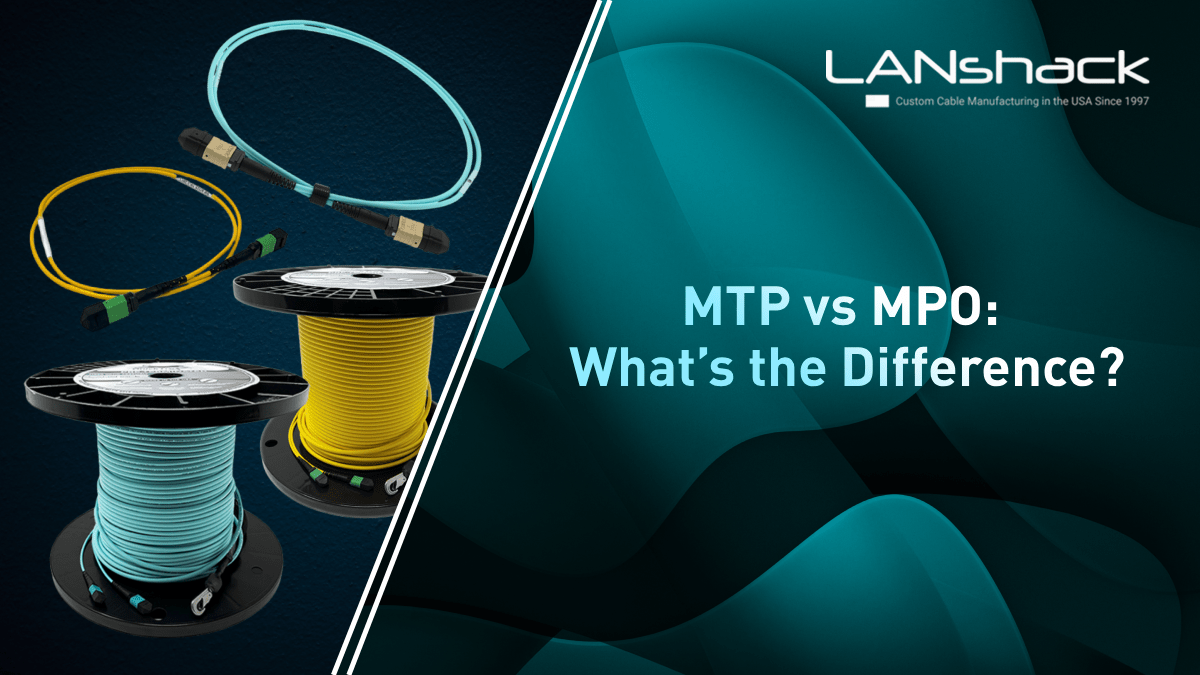


Although the terms are often used interchangeably, MTP and MPO are not exactly the same thing.
MPO (Multi-Fiber Push-On) is the industry-standard connector format used for high-density fiber connectivity, while MTP® is a premium MPO connector developed by US Conec with performance enhancements such as improved alignment, lower insertion loss, and easier handling.
In simple terms:
All MTP connectors follow MPO standards, but not all MPO connectors are MTP.
Both are commonly used in high-density fiber assemblies, trunk assemblies, and backbone infrastructure, but deployment requirements often determine which option makes the most sense.
MTP vs MPO at a Glance
| Feature | MPO | MTP® |
| Connector Type | Industry-standard connector | Premium MPO connector |
| Manufacturer | Multiple manufacturers | US Conec |
| Alignment | Standard | Enhanced alignment |
| Insertion Loss | Standard | Lower-loss options available |
| Durability | Standard | Enhanced performance design |
| Typical Use | General fiber deployments | Higher-performance environments |
| Compatibility | Industry standard | MPO compatible |
What Is MPO?
MPO (Multi-Fiber Push-On) is the industry-standard multi-fiber connector format designed to support multiple optical fibers within a single high-density interface.
Instead of connecting fibers individually, MPO connectors allow multiple fibers to be organized through one connection point, helping simplify high-density fiber deployments.
MPO connectivity is commonly used in:
- backbone fiber infrastructure
- high-density data center environments
- telecom networks
- enterprise fiber deployments
In many environments, MPO connectors are deployed through pre-terminated fiber assemblies and trunk assemblies designed to simplify installation and improve scalability.
 Explore MPO Cable for a broader understanding of MPO-based fiber assemblies and applications.
What Is MTP?
MTP® is a premium MPO connector developed by US Conec that follows MPO standards while adding performance improvements designed for demanding high-density environments.
Compared to standard MPO connectors, MTP connectors may include enhancements such as:
- improved mechanical alignment
- lower insertion loss options
- easier insertion and removal
- better long-term performance consistency
Because of these advantages, many organizations choose MTP fiber assemblies for enterprise, telecom, and data center environments where reliability and scalability are priorities.
Learn how MTP connectors are designed and deployedKey Differences Between MTP and MPO
Although MTP and MPO are compatible, there are important differences worth understanding.
| Feature | MPO | MTP® |
| Connector Type | Industry-standard connector | Premium MPO connector |
| Manufacturer | Multiple manufacturers | US Conec |
| Alignment | Standard | Enhanced alignment |
| Insertion Loss | Standard | Lower-loss options available |
| Durability | Standard | Improved mechanical performance |
| Typical Use | General fiber connectivity | Higher-performance environments |
| Compatibility | Industry standard | MPO compatible |
How does polarity impact connector performance?The biggest difference is that:
MTP is an enhanced connector built on MPO standards.
Organizations often evaluate:
- performance requirements
- deployment scale
- network density
- long-term reliability goals
- budget considerations
before deciding which option makes the most sense.
When to Choose MTP
Organizations often choose MTP fiber assemblies in environments where performance consistency, scalability, and high-density infrastructure are priorities.
MTP is commonly preferred for:
- Data center backbone infrastructure
- High-density enterprise environments
- Telecom networks
- Cloud and AI infrastructure
- Mission-critical deployments
In environments with higher bandwidth requirements or long-term growth plans, MTP assemblies may offer additional deployment confidence.
When Standard MPO May Be Appropriate
Not every deployment requires premium connector performance.
Depending on infrastructure requirements, standard MPO connectivity may remain suitable for:
- lower-density environments
- cost-sensitive deployments
- less demanding network requirements
- shorter infrastructure runs
The right choice often depends on performance expectations, scalability goals, and deployment requirements.
Once you've selected a connector type, the next step is to Choose the Right MTP/MPO Trunk Assembly (12F–288F)Common Misconceptions About MTP vs MPO
"MTP and MPO are completely different technologies"
Not exactly. MTP follows MPO standards, meaning both are designed for high-density fiber connectivity.
"MTP is always required"
Not always. Some deployments work well with standard MPO connectivity depending on performance requirements.
"MPO is outdated"
Incorrect. MPO remains the industry-standard connector format widely used in high-density fiber environments.
"All MPO connectors perform the same"
Connector quality, insertion loss, and deployment requirements can vary between manufacturers and environments.
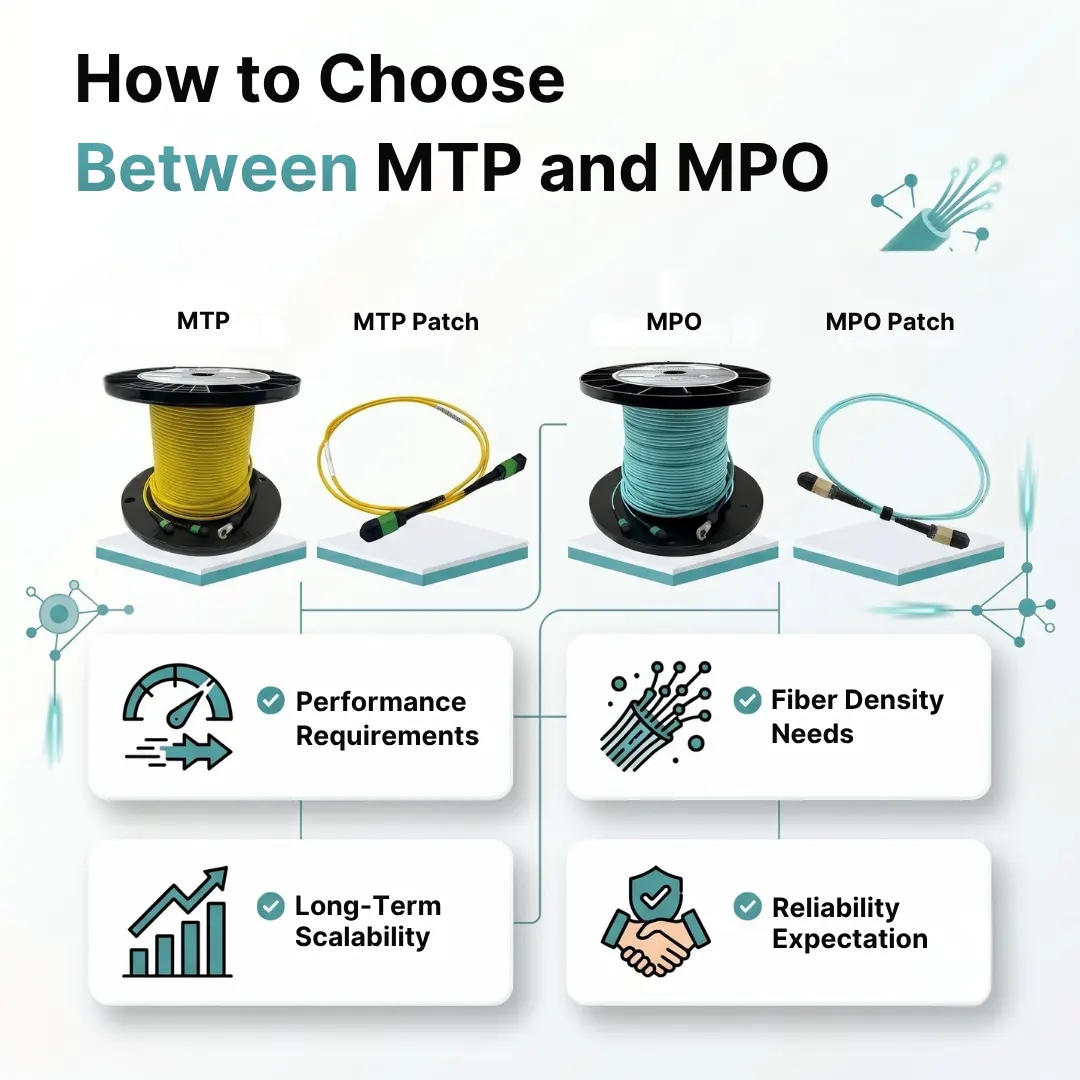
How to Choose Between MTP and MPO
Before selecting an option, network teams often evaluate:
- deployment environment
- performance requirements
- fiber density needs
- long-term scalability
- reliability expectations
- budget priorities
For demanding high-density environments, many organizations prefer MTP fiber assemblies, while standard MPO may remain suitable for less demanding applications.
Frequently asked questions
Q1: Is MTP better than MPO?
MTP includes performance enhancements compared to standard MPO connectors, but the best option depends on deployment requirements.
Q2: Can MTP connect to MPO?
Yes. MTP connectors are MPO compatible, meaning they can connect within MPO-based environments.
Q3: What is the main difference between MTP and MPO?
MTP is a premium MPO connector developed by US Conec with enhancements such as improved alignment and lower insertion loss.
Q4: Is MPO outdated?
No. MPO remains the industry-standard connector format for high-density fiber connectivity.
Q5: Why do data centers use MTP?
Many data centers choose MTP fiber assemblies to support scalable high-density connectivity and performance consistency.